

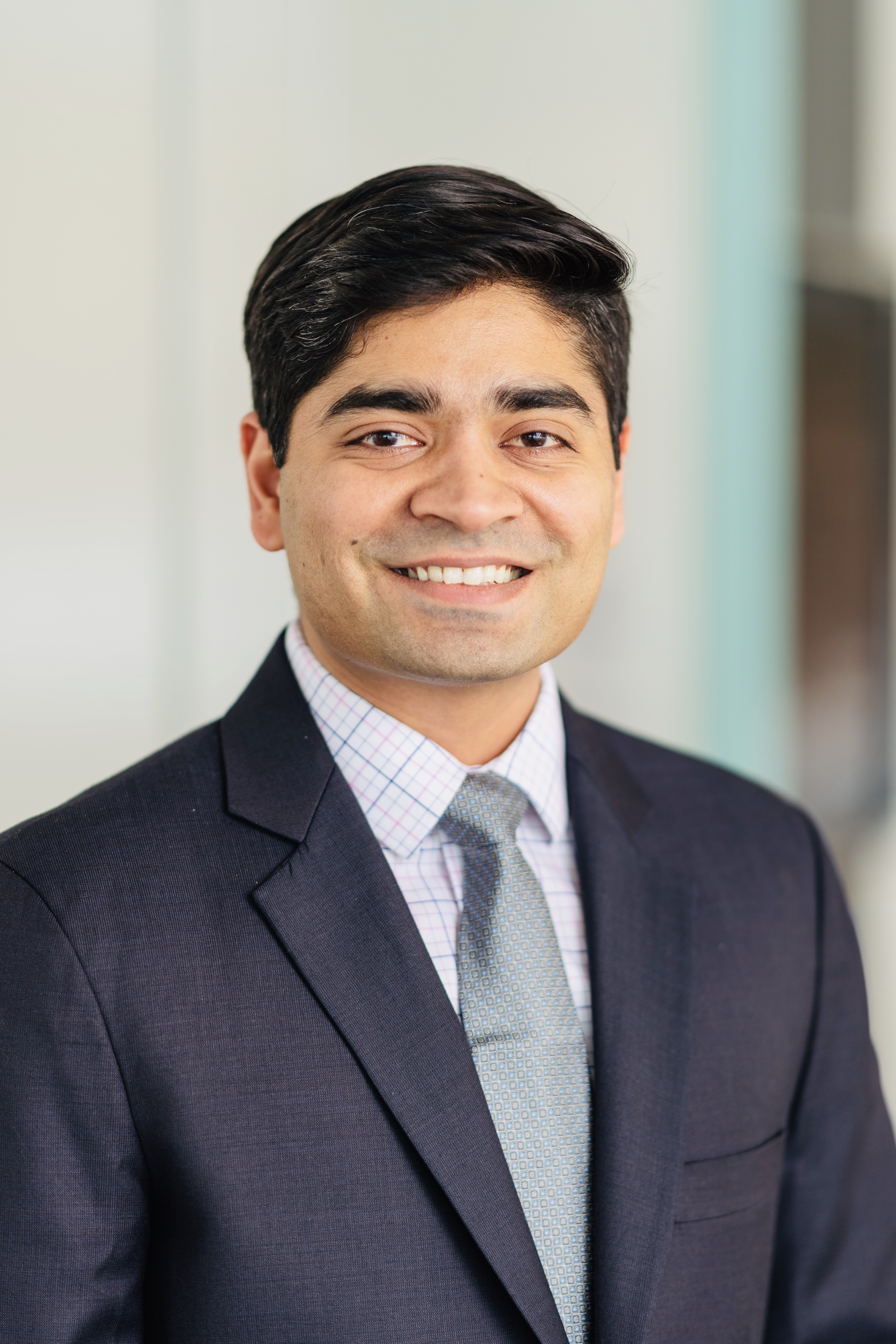
Building the Systems That Make Aerospace Hardware Possible
I started in manufacturing. At Godrej & Boyce, I worked on precision component assembly and process optimization — where I achieved a 60% throughput increase through root-cause analysis and systematic redesign. But I quickly realized the real leverage was at the intersection of physics and production: understanding how simulation drives manufacturing constraints, and vice versa.
So I pivoted. I spent a decade working across every layer of the aerospace stack — from national labs (LANL) to commercial space (Blue Origin, Amazon Leo) to high-performance computing (AMD). I built GPU-accelerated multiphysics solvers for hypersonic reentry, optimized constellation-scale systems architecture, and constantly asked the same question: Why doesn't the simulation world talk to the manufacturing world?
Now I'm pursuing that question directly. I'm exploring the manufacturing bottleneck in aerospace — where the best physics and engineering are constrained not by science, but by the systems that translate ideas into hardware. I believe the opportunity there is immense, and I have the rare combination of experience to see it clearly.
Download ResumeCore Expertise
Aerospace Manufacturing Systems
Process optimization, quality assurance, and production constraint analysis. Experience spanning assembly, testing, and capital-intensive production at scale.
Simulation-to-Hardware Validation
Bridging the gap between high-fidelity computational models and real-world hardware performance. Hypersonic reentry, thermal analysis, and structural validation.
High-Performance Computing
GPU-accelerated multiphysics solvers, distributed systems, and large-scale data processing. Optimization for both numerical rigor and production speed.
Technical Background
Years in Aerospace
Employers & Organizations
Aerospace Development Programs
Education
+
Ph.D., Mechanical Engineering and
Scientific Computing
University of Michigan, Ann Arbor,
MI
01/2016 - 05/2020
M.S., Mathematics
University of Michigan, Ann Arbor,
MI
09/2019 - 05/2020
M.S.E., Mechanical Engineering
University of Michigan, Ann Arbor,
MI
01/2014 - 08/2015
B.E., Production Engineering
University of Mumbai, Mumbai,
India
08/2008 - 06/2012
AIAA Certificates
Hypersonic Aerothermodynamics (2025)
Hypersonic Propulsion Concepts (2024)
Hypersonic Flight Vehicle Design and
Performance Analysis (2023)
Work Experience
+
Amazon Kuiper Manufacturing LLC
Seattle, WA
Lead Systems Engineer, Re-entry &
Demise, 03/2026 - Present
Spearheading the end-of-life (EOL) and
atmospheric demise architecture for
large-scale satellite constellations,
ensuring 100% compliance with global debris
mitigation standards and FCC/ITU
regulations. Leading the cross-functional
development of thermal and structural demise
simulations to predict spacecraft
fragmentation behaviors, optimizing
component design to minimize ground casualty
risk. Developing automated trade-study
frameworks to evaluate re-entry
survivability across diverse hardware
configurations, bridging the gap between
high-level mission requirements and detailed
subsystem manufacturing.
Reditus Space, Inc.
Seattle, WA
Head of Reentry System Development,
04/2025 - 03/2026
Architected vehicle-level reentry systems
from zero-to-one. Owned technical risk
posture and vehicle roadmap. Secured
$250k Navy STTR
and authored proposals for
$15M+ in
government contracts. Built and scaled
high-performing engineering team.
Blue Origin, LLC.
Seattle, WA
Multi-physics Simulations Engineer,
Advanced Concepts & Enterprise
Engineering, 01/2025 - 03/2025
Led technical maturation of critical
thermal/fluid interfaces for
$35M NASA Tipping Point "Blue
Alchemist"
reactor. Architected integrated
multi-physics frameworks to bridge
simulation with manufacturing data.
Advanced Micro Devices, Inc.
(AMD)
Austin, TX
Sr. Member of Technical Staff Software
System Design Eng., 11/2020 - 12/2024
Led CFD optimization and benchmarking for
AMD's HPC GPU portfolio. Recipient of
AMD Next 5% Award for
contributions to MI300A launch. Developed
HPC performance optimization methodologies
adopted across GPU enablement efforts.
Scientific Computing and Flow Physics
Lab, University of Michigan
Ann Arbor, MI
Graduate Student Research Assistant, 01/2014 - 05/2020
Performed CFD analysis on flow separation
reduction strategies. Developed
high-fidelity simulation software in modern
C++ for hypersonic flow simulations.
Published 5+ scientific publications.
Los Alamos National Laboratory
Los Alamos, NM
Computational Sciences Graduate
Intern, 06/2019 - 08/2019
Collaborated on core-collapse supernova
modeling. Refactored C/C++ scientific code
to reduce computational bottlenecks with
multi-threading and GPU programming.
Godrej & Boyce Mfg. Co. Ltd.
Mumbai, India
Graduate Engineer Trainee, 07/2012
- 07/2013
Handled end-to-end capital procurement and
developed cost models with annual net
savings of
10%+.
Godrej & Boyce Mfg. Co. Ltd.
Mumbai, India
B.E. Project Trainee, 11/2011 -
04/2012
Key Achievement: 40%+ daily production
increase
through FMEA-driven process redesign.
Reduced lead time to order dispatch by 1.5x.
Honors & Awards
+
Next 5% Award - 2023
Advanced Micro Devices, Inc. (AMD)
Recognition for contributions to MI300A launch and OpenFOAM optimization.
Spotlight Awards (multiple) - 2021–2024
Advanced Micro Devices, Inc. (AMD)
Recognized for strategic contributions to HPC GPU portfolio initiatives.
Michigan Institute for Computational Discovery & Engineering (MICDE) Fellowship - 09/2019 - 09/2020
University of Michigan
Doctoral research fellowship.
Best Poster Award - 2019
Los Alamos National Laboratory Student Symposium
Graduate Fellowship - 01/2016 - 01/2019
Curadev Pharma Pvt. Ltd.
Engineering Graduate Symposium Best Poster Award (3rd place) - 2017
University of Michigan
The Problem I'm Pursuing
I'm not claiming to have solved this yet. I'm actively investigating it: talking to aerospace manufacturers, customers, and domain experts to understand the real constraints on production. What I've observed is that the bottleneck in aerospace manufacturing is not physics. It's systems — the gap between what simulation says is possible and what production can actually deliver.
New launch cadences, reentry systems, and satellite constellations are placing unprecedented demands on manufacturing. The companies that can bridge simulation and production will win. That's the question I'm spending the next year answering.
"The bottleneck in aerospace isn't the physics. It's the manufacturing."
Want to Explore This Problem Together?
I'm meeting with customers, domain experts, and investors to understand this space. Let's talk.